Regulatory Compliance Mark (RCM) for Australia and New Zealand | paulspiece.com


This paper and companion presentation were written by Paul W Robinson, Australia, and presented to the IEEE Symposium on Product Compliance Engineering (ISPCE) in Orange County, May 2016 …

Source: Regulatory Compliance Mark (RCM) for Australia and New Zealand | paulspiece.com

Worksafe New Zealand: New Electrical Equipment Declared Articles (April 2016)


Amazon bans the sale of rogue USB-C cables


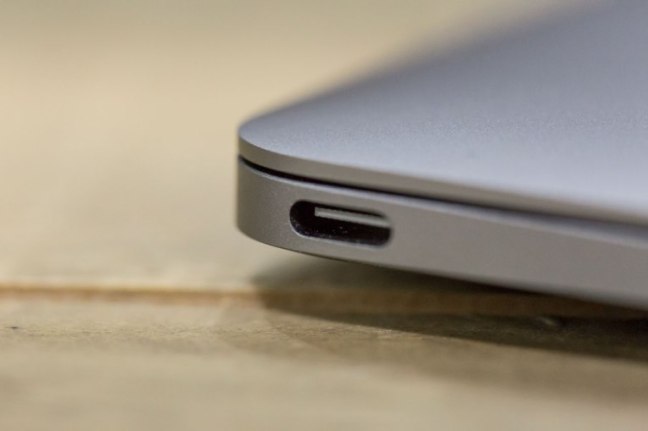
USB-C is good news for consumers and companies alike because it helps standardize the very different kinds of ports and adaptors that tech firms have traditionally used for their products. But low quality and cheap cables have flooded the market, causing more harm than good by frying laptops and phones so that they can’t be used again. Finally, it seems that major distributors like Amazon are waking up to the issue and clamping down …

Source: Amazon bans the sale of rogue USB-C cables

Role of terminology in scientific and technical communication


Luca Mari with assistance from Joanna Goodwin, provides a general introduction to the role of terminology in scientific and technical communication, and particularly to definitions, a critical component of standards documents

Source: IEC – Standards development > Resources: Role of terminology in scientific and technical communication

ACMA – RCM – end of transition period approaching


The single Regulatory Compliance Mark (RCM) was introduced on 1 March 2013 with a three-year transition period to 29 February 2016.

The RCM illustrates a product’s compliance with all applicable ACMA standards—telecommunications, radiocommunications, electromagnetic compatibility (EMC) and electromagnetic energy (EME).

Suppliers must register on the online national database and start using the RCM by 1 March 2016.

Products that have already been labelled with the C-Tick or A-Tick can continue to be supplied until labelled stock has been exhausted.

Source: Single compliance mark—end of transition period approaching!

Customer Letter – Apple Feb 16, 2017


Extract from a letter from Apple to its customers about a US court order threat to its iPhone encryption:


Specifically, the FBI wants us to make a new version of the iPhone operating system, circumventing several important security features, and install it on an iPhone recovered during the investigation. In the wrong hands, this software — which does not exist today — would have the potential to unlock any iPhone in someone’s physical possession.

The FBI may use different words to describe this tool, but make no mistake: Building a version of iOS that bypasses security in this way would undeniably create a backdoor. And while the government may argue that its use would be limited to this case, there is no way to guarantee such control.

The Threat to Data Security

Some would argue that building a backdoor for just one iPhone is a simple, clean-cut solution. But it ignores both the basics of digital security and the significance of what the government is demanding in this case.In today’s digital world, the “key” to an encrypted system is a piece of information that unlocks the data, and it is only as secure as the protections around it. Once the information is known, or a way to bypass the code is revealed, the encryption can be defeated by anyone with that knowledge.

The government suggests this tool could only be used once, on one phone. But that’s simply not true. Once created, the technique could be used over and over again, on any number of devices. In the physical world, it would be the equivalent of a master key, capable of opening hundreds of millions of locks — from restaurants and banks to stores and homes. No reasonable person would find that acceptable.

The government is asking Apple to hack our own users and undermine decades of security advancements that protect our customers — including tens of millions of American citizens — from sophisticated hackers and cybercriminals. The same engineers who built strong encryption into the iPhone to protect our users would, ironically, be ordered to weaken those protections and make our users less safe.

We can find no precedent for an American company being forced to expose its customers to a greater risk of attack. For years, cryptologists and national security experts have been warning against weakening encryption. Doing so would hurt only the well-meaning and law-abiding citizens who rely on companies like Apple to protect their data. Criminals and bad actors will still encrypt, using tools that are readily available to them.

Source: Customer Letter – Apple

ISPCE 2016, Anaheim California May 16-18, 2016


IEEE Symposium on Product Compliance Engineering (ISPCE)

The Mission of the ISPCE it to provide a forum for product safety engineers and design engineers to discuss and disseminate technical information related to product safety, to enhance personal product safety engineering skills, and to provide product safety engineering outreach to engineers, students and others with an interest in this field as well as the related fields of product safety regulatory compliance.

2016 Preliminary Program: http://2016.psessymposium.org/program

Registration: http://2016.psessymposium.org/registration

Source: Welcome | Conference Starup

Recalls: Panasonic Australia Pty Ltd—Rechargeable Battery Pack CF-VZSU61U


What are the defects?

There is a risk that the rechargeable battery pack may overheat cause smoke or may ignite.

What are the hazards?

If the defect occurs, there is a risk of a fire or a burn hazard to consumers and to the CF-S10 Panasonic Toughbook Computer

Source: Panasonic Australia Pty Ltd—Rechargeable Battery Pack CF-VZSU61U

Woolworths misled consumers over product safety hazards – Ordered to pay over $3 million in penalties


“Australian consumers must be able to rely on the safety of goods supplied to them by retailers. By failing to recall and remove products from its shelves for some time after it became aware that the products were defective, Woolworths misled Australian consumers and placed their safety at risk. The significant penalties imposed in this case reflect the serious nature of Woolworths’ conduct.” Mr Sims said “In the future, companies generally must do more to detect unsafe products and remove them from their shelves. The Court has ordered Woolworths to implement an upgraded, dedicated product safety compliance program, and its quality assurance processes will be monitored by an external auditor”.

Source: Woolworths misled consumers over product safety hazards – Ordered to pay over $3 million in penalties

Apple AC Wall Plug Adapter Exchange Program


“Apple has determined that, in very rare cases, the two prong Apple AC wall plug adapters designed for use in Continental Europe, Australia, New Zealand, Korea, Argentina and Brazil may break and create a risk of electrical shock if touched. These wall plug adapters shipped from 2003 to 2015 with Mac and certain iOS devices, and were also included in the Apple World Travel Adapter Kit.”

See details at the Source: Apple AC Wall Plug Adapter Exchange Program – Apple Support

Australia Safety Recall: Microsoft Corporation—Microsoft AC Power Cordset for Surface Pro, Pro 2 & Selected Pro 3 Models


What are the defects?

The AC supply flexible cord of the cordset can fail at the entry to the appliance connector where it plugs into the power supply unit for the device, or at the entry to the power socket.

What are the hazards?

Risk of electric shock and fire.

Source: Microsoft Corporation—Microsoft AC Power Cordset for Surface Pro, Pro 2 & Selected Pro 3 Models

Doping Lithium-ion Batteries to Make Them Safer


When lithium-ion batteries overheat, they can burn through internal pockets, burst into flames, and even explode. One reason such damage can occur is the formation of dendrites—finger-like deposits of lithium that can grow long enough to pierce the barrier between a lithium-ion battery’s halves and cause it to short out.

Dendrites form when a battery electrode degrades and metal ions deposit onto the electrode’s surface. …

In their latest work, Stanford researchers used chemicals designed to prevent dendrite formation.

see: http://spectrum.ieee.org/energywise/consumer-electronics/portable-devices/doping-lithiumion-batteries-to-make-them-safer


2015 Ig Nobel Prizes Announced | In Compliance Magazine


Not to be confused with the Nobel Prizes, the Ig Nobel Prizes are intended to “honor achievements that first make people laugh and then make them think.” – see the article in the link:

Source: 2015 Ig Nobel Prizes Announced | In Compliance Magazine

IBM engineers carbon nanotube transistors to replace silicon in computing | VentureBeat | Business | by Dean Takahashi


Carbon nanotubes are the leading candidate to replace silicon in semiconductor chips after the decades-long run of silicon electronics runs out. And IBM is hoping to usher along that transition with a new breakthrough being announced today. In the October 2 issue of the journal Science, IBM researchers say they have overcome one of the most daunting challenges around carbon nanotube transistors, which are the building blocks of electronic circuits with dimensions that are measured in billionths of a meter.  Carbon nanotube chips could greatly improve the capabilities of high-performance computers, enabling Big Data to be analyzed faster, increasing the power and battery life of mobile devices and the Internet of Things, and allowing cloud data centers to deliver services more efficiently and economically, IBM said.

Source: IBM engineers carbon nanotube transistors to replace silicon in computing | VentureBeat | Business | by Dean Takahashi