Standards Australia has published a DVB-T2 Digital TV receiver standard. The document is AS 5362:2024 (see https://www.standards.org.au/standards-catalogue/standard-details?designation=AS-5362-2024 or your favorite standards store). This new voluntary standard covers “Requirements for receivers for VHF/UHF DVB-T2 television broadcasts including ancillary services”. It is a companion standard to the revised edition of AS 4933:2024 (DVB-T) that was published at the same time.
The older edition of AS 4933:2015 can be used for two years if needed, but suppliers are encouraged to upgrade and adopt the 2024 edition sooner because it fully replaces the 2015 edition on 15 November 2026.
Note that at present while there are no general DVB-T2 broadcast services in Australia (for now we still use DVB-T), the adoption of DVB-T2 in the receiver standards is for planning purposes to prepare for future broadcast expectations.
AS/NZS 62368.1:2022 was published in June 2022
Available from Standards Australia and other standards stores:
Audio/video, information and communication technology equipment, Part 1: Safety requirements (IEC 62368-1:2018 (ED. 3.0), MOD)
This is the ANZ-modified adoption of IEC 62368-1:2018, containing most of the previous national differences. The NDs are listed in the IECEE CB scheme for those suppliers and labs who wish to include it in their test report results. It may be used now for compliance, as it operates in parallel with the AS/NZS 62368.1:2018 edition until 06 April 2025, when it supersedes the 2018 edition.
Note that AS/NZS 60950.1 and AS/NZS 60065 are now obsolete and should not be used for new approvals.
ANZ Adoption of IEC 62368-1:2018 Ed3 public comment open
See the link from Standards Australia below.
Standard: AS/NZS 62368-1 Audio/video, information and communication technology equipment – Part 1: Safety requirements
Comment Start Date: 20/10/2021
Comment End Date: 22/12/2021
You can view the draft with latest comments and provide your feedback here:
https://comment.standards.org.au/Drafts/929ff081-ef78-43e4-a79e-a569d40b8dac
Australian Consumer Law (ACL) applies Consumer Guarantees to sales up to AUD $100k and treats businesses as consumers
See the article at: https://www.mondaq.com/australia/consumer-law/1101994/australian-consumer-law-update-mid-year-update?email_access=on
No changes to product liability or safety have been included.
Qi wireless charging power transfer system explained
This is an interesting article about how mobile phones and other devices use the wireless charging system called Qi. New chips developed allow up to 50 W of power transfer and have safety circuits to prevent overheating foreign objects that might come between the energy source and the load.
Source:
https://www.allaboutcircuits.com/news/how-does-qi-wireless-charging-standard-work/
Processor power efficiency, beyond Moores Law
This article focuses on improving processor power efficiency by a process of heterogeneous multicore design that switches off transistors that are not being used, and assigining individual specialised cores of a multicore processor to work at specific kinds of tasks so the unneeded functions at any specific time can be switched off so they aren’t using power.
Source: https://www.evaluationengineering.com/applications/embedded-system-design/article/21161575/heterogeneous-cores-turn-off-transistors-to-save-power
Australian Consumer Law (ACL) guarantees to increase to $100K AUD
From 2020-07-01, the mandatory minimum consumer guarantees specified in the ACL (and also financial services) will apply to goods and services costing up to $100k. Presently the upper limit is $40k. Goods must be fit for purpose (which includes safety as well as function) and of reasonable quality. Professional services must be provided with skill and proper care. Minimum guarantees provided in law cannot be excluded in contracts. While there are certain exclusions for some business transformation type transactions, a business can be classed as a “consumer” also.
For further information see:
https://www.mondaq.com/australia/consumer-law/977602/threshold-for-acl-consumer-guarantees-set-to-increase-to-100k?email_access=on
Skin Monitoring Apps Fail to Detect Melanomas – IEEE Spectrum
“T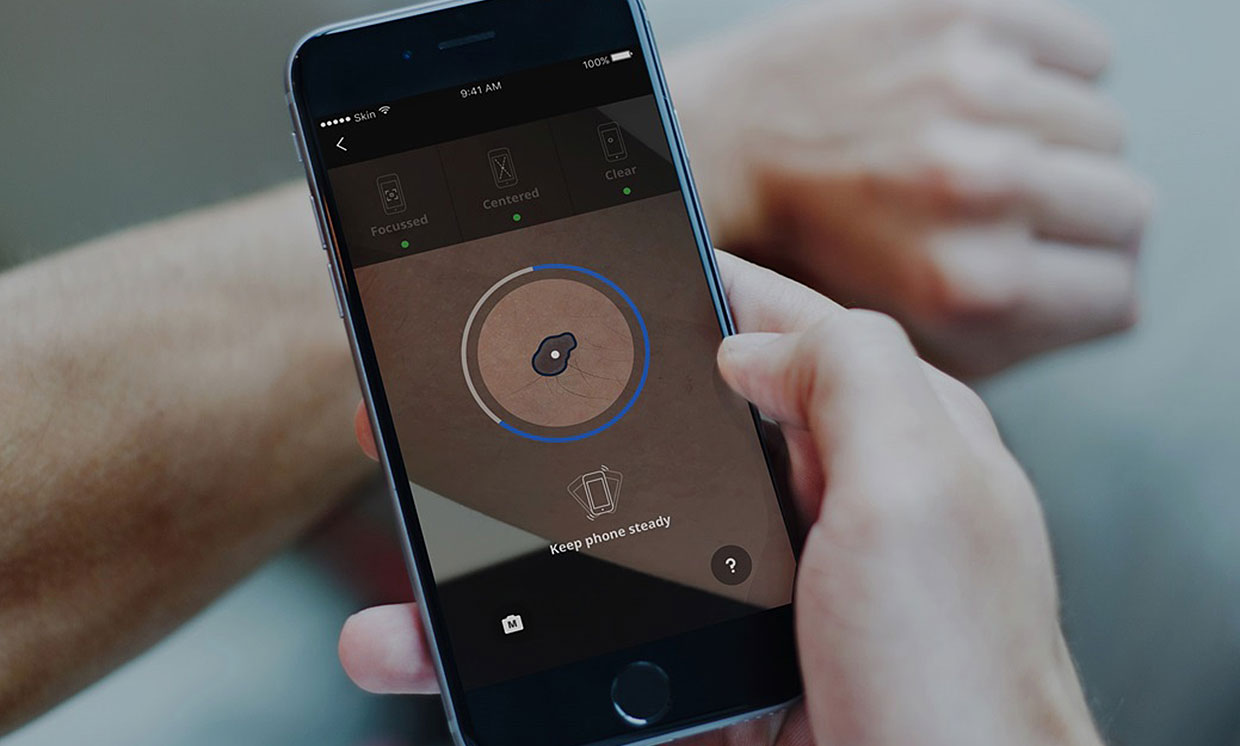 he worst thing would be if somebody had a melanoma which [an app] said was fine, and then they didn’t go to the doctor when they would have before,” he said. “That’s doing harm.”
Source: Skin Monitoring Apps Fail to Detect Melanomas – IEEE Spectrum
Improving the Effectiveness of the Consumer Product Safety System (Australia)
The Commonwealth Treasury (Treasury) is undertaking this assessment and public consultation on behalf of the Commonwealth, states and territories. This Consultation Regulation Impact Statement (RIS) provides an overview of the current product safety system, explains identified problems and outlines some potential reform options for feedback, including options for a GSP.
See the link to obtain the document.
Source: Improving the Effectiveness of the Consumer Product Safety System – The Treasury – Citizen Space
Study Identifies Main Culprit Behind Lithium Metal Battery Failure
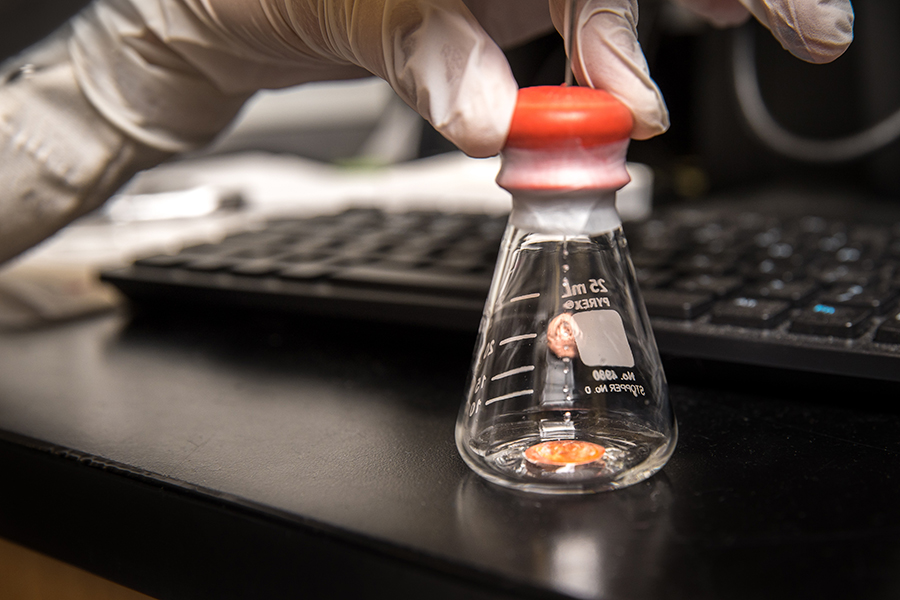 Researchers have discovered the root cause of why lithium metal batteries fail, challenging a long-held belief in the field. The study presents new ways to boost battery performance and brings research a step closer to incorporating lithium anodes into rechargeable batteries.
Source: Study Identifies Main Culprit Behind Lithium Metal Battery Failure
Industry’s first trillion transistor chip
Cerebras Systems unveils the industry’s first trillion transistor chip
The Cerebras Wafer Scale Engine, the largest chip ever built, transforms the artificial intelligence landscape with unprecedented compute density.
400,000 cores, and 18 GB on chip, low power, super fast data, optimized for AI.
Measuring human exposure to 5G | IEC e-tech | Issue’ 03/2019
Measuring human exposure to 5G:
“IEC TC 106 is playing a key role with the recent publication of a new IEC Technical Report on evaluating human exposure to radio frequency fields in the vicinity of base stations…
IEC 62232 provides methods for determining the radio-frequency field strength near radio-communication base stations with the intention of evaluating human exposure. It takes into account the mmWave frequencies to be used for 5G networks.”
Source: Measuring human exposure to 5G | IEC e-tech | Issue’ 03/2019
New website for EESS (Electrical Equipment Safety Scheme – Australia)
The new EESS website now stands alone to support regulatory activities across multiple states. The safety of household electrical equipment in Queensland, Victoria, Western Australia and Tasmania is regulated using the Electrical Equipment Safety System (EESS), which now has a new online presence at: http://www.EESS.gov.au.
EESS.gov.au removes functions previously found on the Electrical Regulatory Authorities Council (ERAC) website and presents them with enhanced and improved layout and structure, based on feedback from industry.

Source: New standalone website for EESS (Electrical Equipment Safety Scheme)
TGA Australia proposes regulations for Software As A Medical Device (“SaMD”)
TGA is proposing to treat software as a medical device in its own right. Presently it’s only regulated as part of another medical device used to treat patients if it could cause harm to patients. The new reforms would treat the software as a medical device directly if it’s used by medical practitioners to diagnose patient conditions (different levels for critical outcomes diagnosis or just screening). The new proposed regulations are based on
International Medical Devices Regulators Forum (IMDRF) guidelines.
See the following Source for further details.
Source: http://www.mondaq.com/article.asp?articleid=791862&email_access=on
Adopting AS/NZS 62368.1 into national comms cable component and wiring standards (Australia)
Communications Alliance has published two draft standards for public comment on their web site, which now incorporate the principles of the new hazards-based standard: AS/NZS 62368.1:2018 (IEC 62368-1 2nd ed [MOD]). There is also an explanatory background paper. Public commenting closes on 24 May 2019. The standards are:
DR AS/CA S008:2019 Requirements for customer cabling products, and
DR AS/CA S009:2019 Installation requirements for customer cabling (Wiring rules)
Background Paper: DR S008 & DR S009 public comment background paper
The drafts are available for download from Communications Alliance at the following web address:
https://www.commsalliance.com.au/Documents/public-comment
Draft: DR S008_2019 (1,025 KB)
Draft: DR S009_2019 (2,442 KB)
 paulspiece.com
You must be logged in to post a comment.